Monday, 3 October 2011

3.18c Codominance


Codominance refers to a relationship between two alleles of a gene in which both phenotypes of the genes are visible and do not over power each other in phenotype. 

This happens when both alleles are dominant. 
The offspring will result in an unusual third phenotype as the parents both contribute to the phenotype. The offspring's genotype would be a heterozygous of both dominant alleles. 


Monday, 19 September 2011

3.2 Fertilisation


  • The process of fertilization begins with the adults male and female.
  • The cells in testis and in ovaries have a complete cell of chromosomes                                                      - this is called diploid (2n) which is a complete set of chromosomes and for human it is 46
  • The cells divide to form cells with half sets of chromosomes, this type of cell division is called meiosis  - > this makes the cell go from a diploid number to a haploid number(n) which is a 1/2 set so in humans it is 23 (there are 23 chromosomes in the sperm cell and 23 chromosomes in the egg cell)
  • During sexual reproduction the two cells are brought together and joint/fused together, so forms 1 cell. This process is know as fertilization. Which involves the combining of half set of chromosomes and another half set of chromosomes to make a full set of chromosomes (n+n=2n/in humans 23+23=46)
  • This cell is known as a zygote.
  • We have a combination with a male and female chromosomes. This cell then goes through the process of cell division called mitosis, in which the cells will divide to get 2 cells, they will both contain 46 chromosomes. They will then divide. All cells contain 2n diploid number.
  • When we have sufficient cells, this will then be called an embryo.
  • This principle holds truth for all sexually reproducing organisms but the numbers are for human only
credits to Daniel :)

3.9 b) Structure and Function of a Female reproductive System

Ovary : where Meiosis occur and production of eggs

Oviducts : carry eggs to uterus  and where fertilsation occur in here.

Uterus : wall made from muscle - will stretch during pregnancy and contract during giving birth

Lining of uterus : Accept and develop the fertilise eggs which will be develop here to embryo -> child
                         - Development of placenta

Uterus space: - Embryo develop to unborn child
                      - Both sperm cells and egg cells move

Cervix: entrance to uterus

Vagina : Collect the sperm cells and allow them into the cervix
             - Penis is introduced here


3. 9 a) Structure and function of Male reproductive system

Bladder : Store Urine

Testis : To carry out the process meiosis -> produce gamete = sperm cell

Epididymis: Store sperm cells

Vas deferens : Carry sperm sell to penis during sexual stimulation

Prostate : Contains 20%-30% volume of semen and is known to carry sugars and is alkali
               - The alkali is to neutralize the acidic secretion of the vagina

Seminal Vesicles : produce sugar based alkaline substances and contain 70% volume of semen

Urethra : Common tube which join the left and right testis and Vas deferens
               - Carry Semen and Urine down to Penis

Penis: Carry sperm cells into Vagina during sexual intercourse


Monday, 12 September 2011

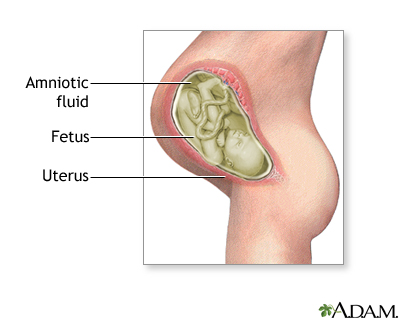
3.12 Amniotic fluid

-Surrounding the uterus space is the amniotic fluid where it can protect the embryo


-This is because the fluid which is largely water can not be compressed. If we squeeze the fluid, it absorbs the pressure. 


- Any force applied to the uterus wall will absorb the pressure and prevent damage to the unborn child.